![[STAGING] Cut Plastic Sheeting](https://staging.cutplasticsheeting.co.uk/app/uploads/2020/09/cut-plastic.svg)

If you’ve been researching clear plastic sheets, you’ve probably come across acrylic, polycarbonate, and PETG. While they can look similar, each material has very different strengths, uses, and price points.
Some are better for signage and displays, others are designed for impact resistance or easier fabrication. Choosing the wrong one can lead to cracking, scratching, yellowing, or unnecessary costs.
In this guide, we’ll explain the key differences between acrylic, polycarbonate, and PETG, including their pros, cons, common uses, and which one is best for your project.
If you’ve been researching clear plastic sheets, you’ve probably come across acrylic, polycarbonate, and PETG. While they can look similar, each material has very different strengths, uses, and price points.
Some are better for signage and displays, others are designed for impact resistance or easier fabrication. Choosing the wrong one can lead to cracking, scratching, yellowing, or unnecessary costs.
In this guide, we’ll explain the key differences between acrylic, polycarbonate, and PETG, including their pros, cons, common uses, and which one is best for your project.
What Is Acrylic?
Polymethyl methacrylate, commonly called acrylic or Perspex-style plastic, is a transparent thermoplastic known for its exceptional clarity and polished appearance.
Acrylic is often chosen because it looks the most like glass while weighing significantly less.
Key Benefits of Acrylic:
- Crystal-clear optical finish
- Excellent weather and UV resistance
- Lightweight
- Easy to laser cut and polish
- Affordable
- Available in many colours and finishes
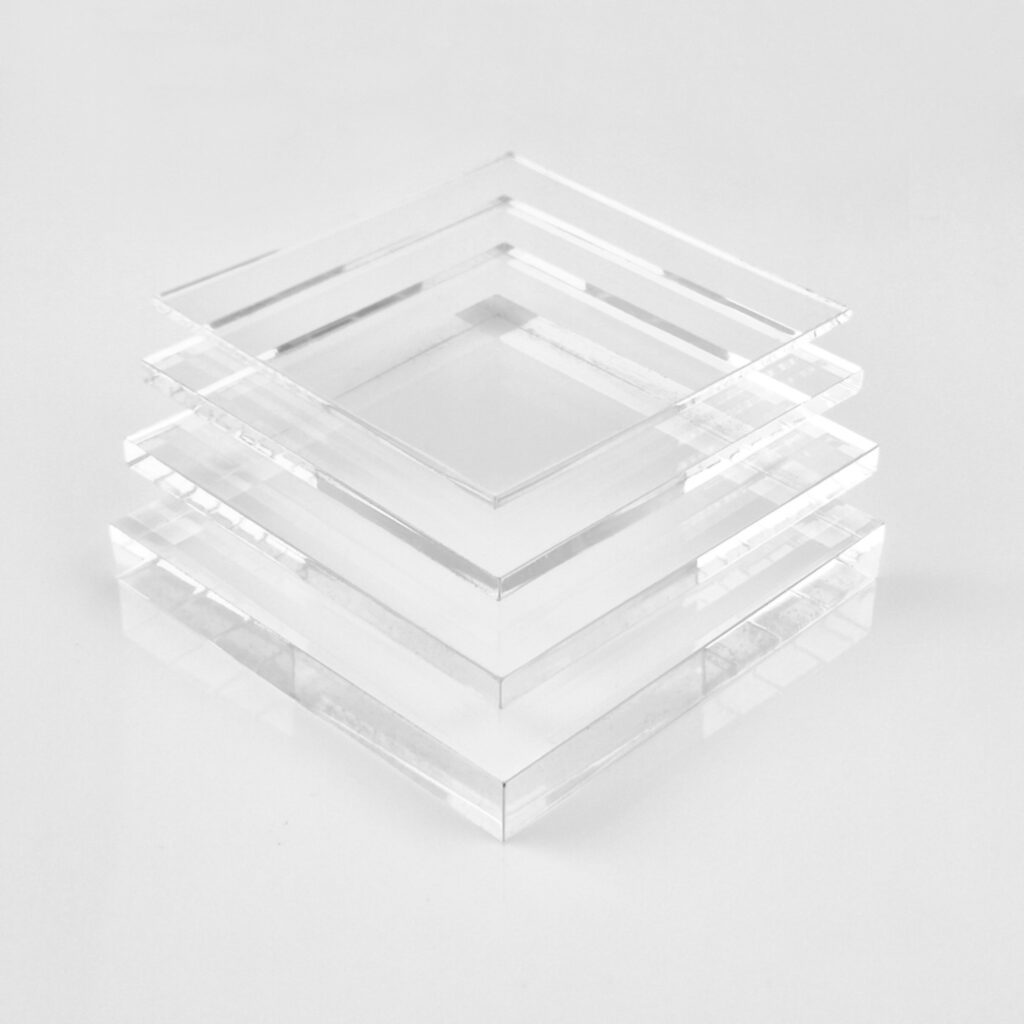
Polymethyl methacrylate, commonly called acrylic or Perspex-style plastic, is a transparent thermoplastic known for its exceptional clarity and polished appearance.
Acrylic is often chosen because it looks the most like glass while weighing significantly less.
Key Benefits of Acrylic:
- Crystal-clear optical finish
- Excellent weather and UV resistance
- Lightweight
- Easy to laser cut and polish
- Affordable
- Available in many colours and finishes

Common Uses of Acrylic:
- Retail signage
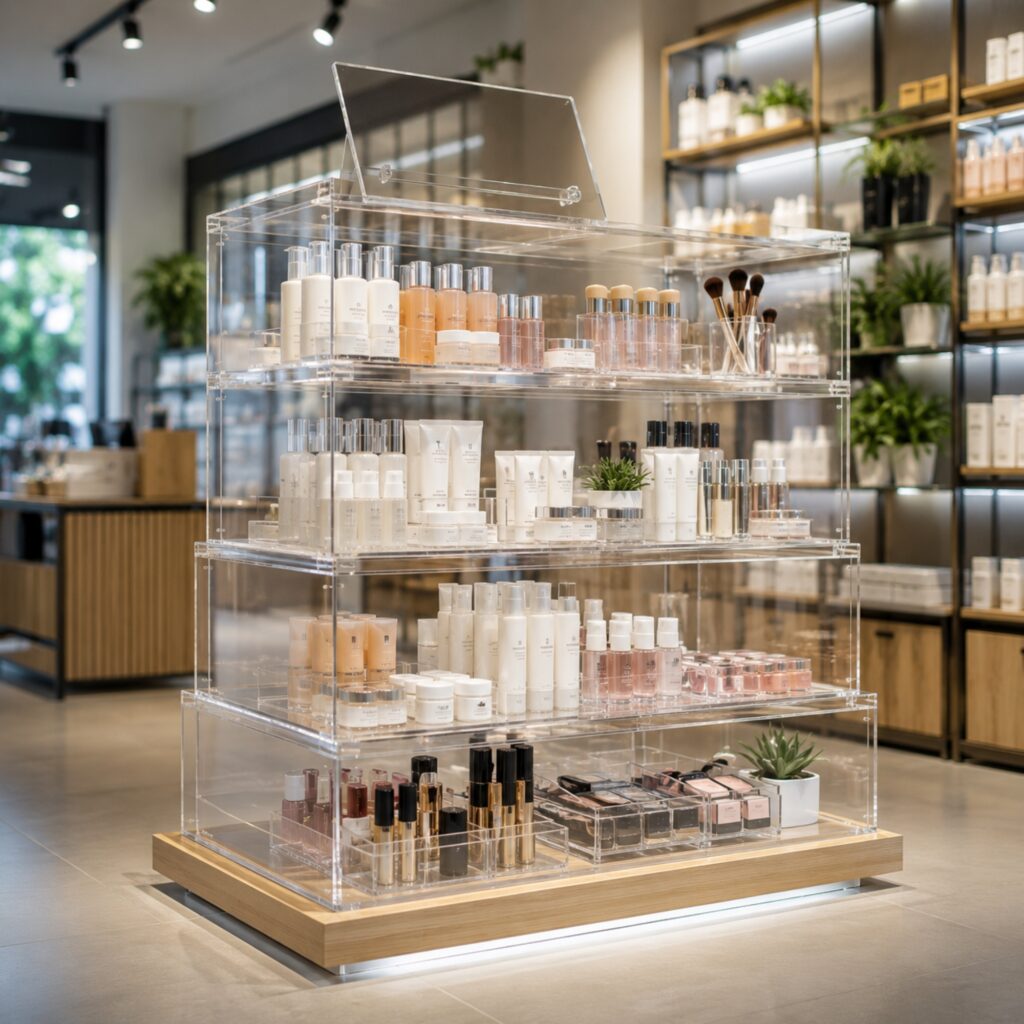
- Display cases
- Point-of-sale displays
- Picture frames
- Protective screens
- Secondary glazing
- Bathroom panels
- LED light diffusers
Downsides of Acrylic:
The biggest weakness of acrylic is impact resistance. It’s much stronger than glass, but under pressure or sudden force, it can crack or shatter.
Acrylic also doesn’t like aggressive drilling or poor fabrication techniques.
Common Uses of Acrylic:
- Retail signage
- Display cases
- Point-of-sale displays
- Picture frames
- Protective screens
- Secondary glazing
- Bathroom panels
- LED light diffusers
Downsides of Acrylic:
The biggest weakness of acrylic is impact resistance. It’s much stronger than glass, but under pressure or sudden force, it can crack or shatter.
Acrylic also doesn’t like aggressive drilling or poor fabrication techniques.
What Is Polycarbonate?
Polycarbonate is an extremely tough engineering plastic designed for high-impact environments.
If acrylic is the “beautiful” material, polycarbonate is the “indestructible” one.
Polycarbonate is widely used where safety matters more than perfect scratch resistance.
Key Benefits of Polycarbonate
- Extremely impact resistant
- Virtually unbreakable
- High heat resistance
- Good optical clarity
- Suitable for safety applications
- Excellent for machine guards and protective barriers
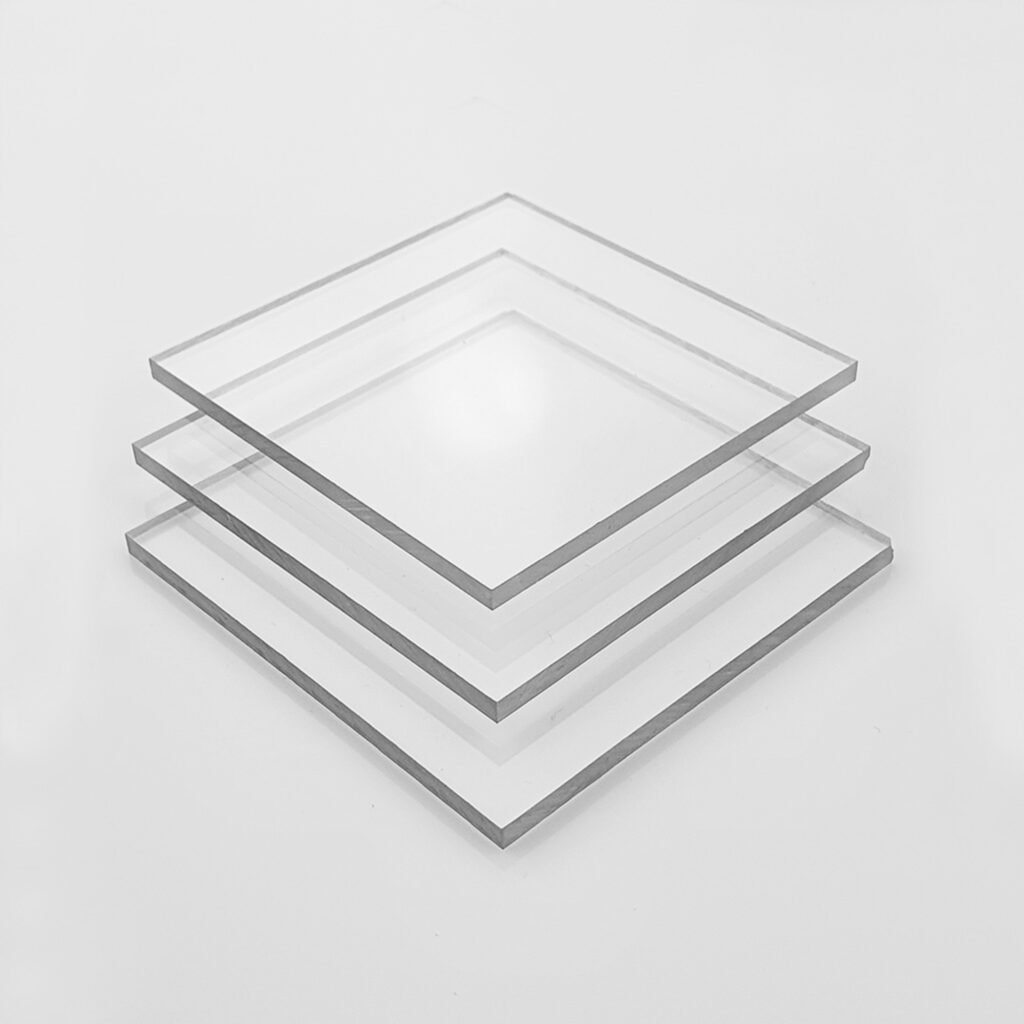
Polycarbonate is an extremely tough engineering plastic designed for high-impact environments.
If acrylic is the “beautiful” material, polycarbonate is the “indestructible” one.
Polycarbonate is widely used where safety matters more than perfect scratch resistance.
Key Benefits of Polycarbonate
- Extremely impact resistant
- Virtually unbreakable
- High heat resistance
- Good optical clarity
- Suitable for safety applications
- Excellent for machine guards and protective barriers
Common Uses of Polycarbonate
- Riot shields
- Machine guards
- Greenhouses
- Security glazing
- Roof panels
- Industrial screens
- Safety visors
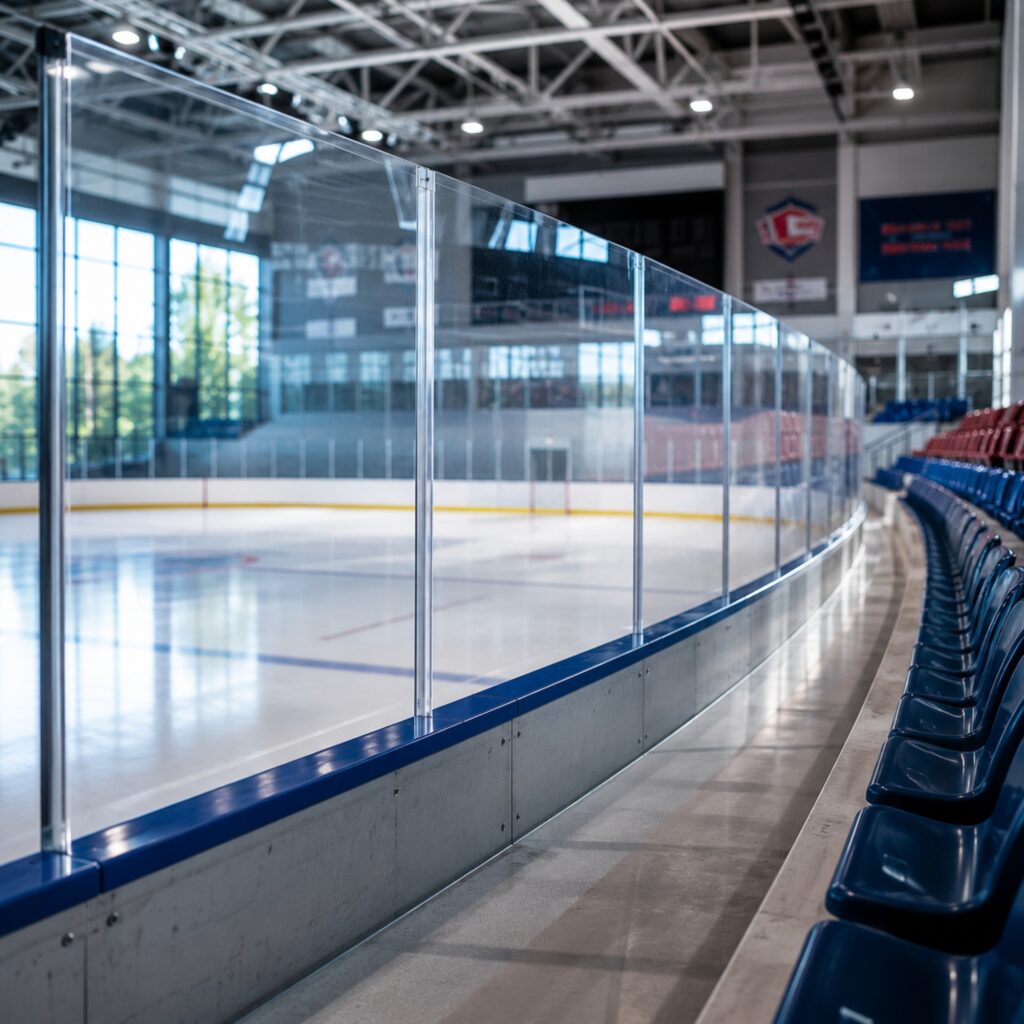
- Sports barriers
Downsides of Polycarbonate
Polycarbonate scratches more easily than acrylic and is usually more expensive.
Common Uses of Polycarbonate
- Riot shields
- Machine guards
- Greenhouses
- Security glazing
- Roof panels
- Industrial screens
- Safety visors
- Sports barriers
Downsides of Polycarbonate
Polycarbonate scratches more easily than acrylic and is usually more expensive.
What Is PETG?
Polyethylene terephthalate glycol is a highly versatile plastic often used where easy fabrication and forming are priorities.
PETG sits somewhere between acrylic and polycarbonate in terms of performance.
It’s tougher than acrylic but easier to fabricate than polycarbonate.
Key Benefits of PETG
- Excellent thermoforming properties
- Strong impact resistance
- Easy to machine and fabricate
- Food-safe grades available
- Good printability
- Less brittle than acrylic
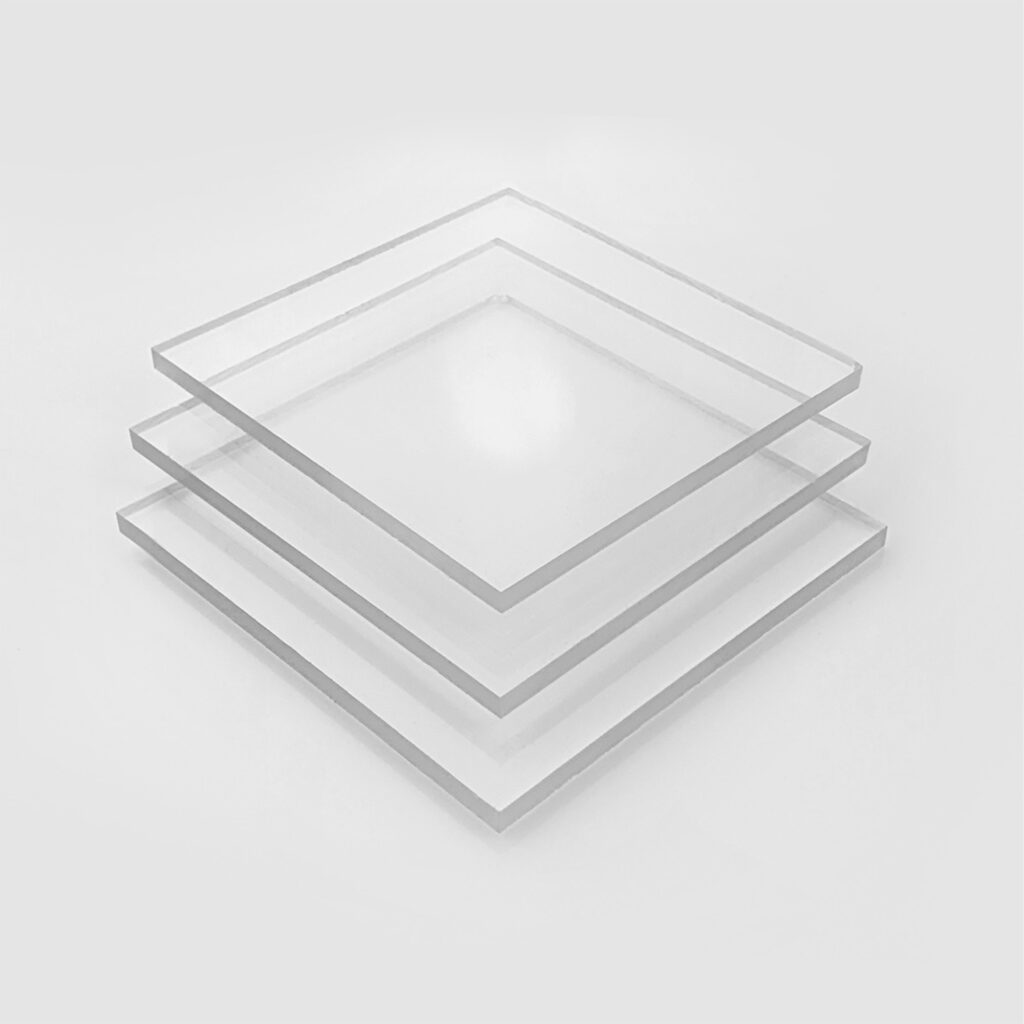
Polyethylene terephthalate glycol is a highly versatile plastic often used where easy fabrication and forming are priorities.
PETG sits somewhere between acrylic and polycarbonate in terms of performance.
It’s tougher than acrylic but easier to fabricate than polycarbonate.
Key Benefits of PETG
- Excellent thermoforming properties
- Strong impact resistance
- Easy to machine and fabricate
- Food-safe grades available
- Good printability
- Less brittle than acrylic
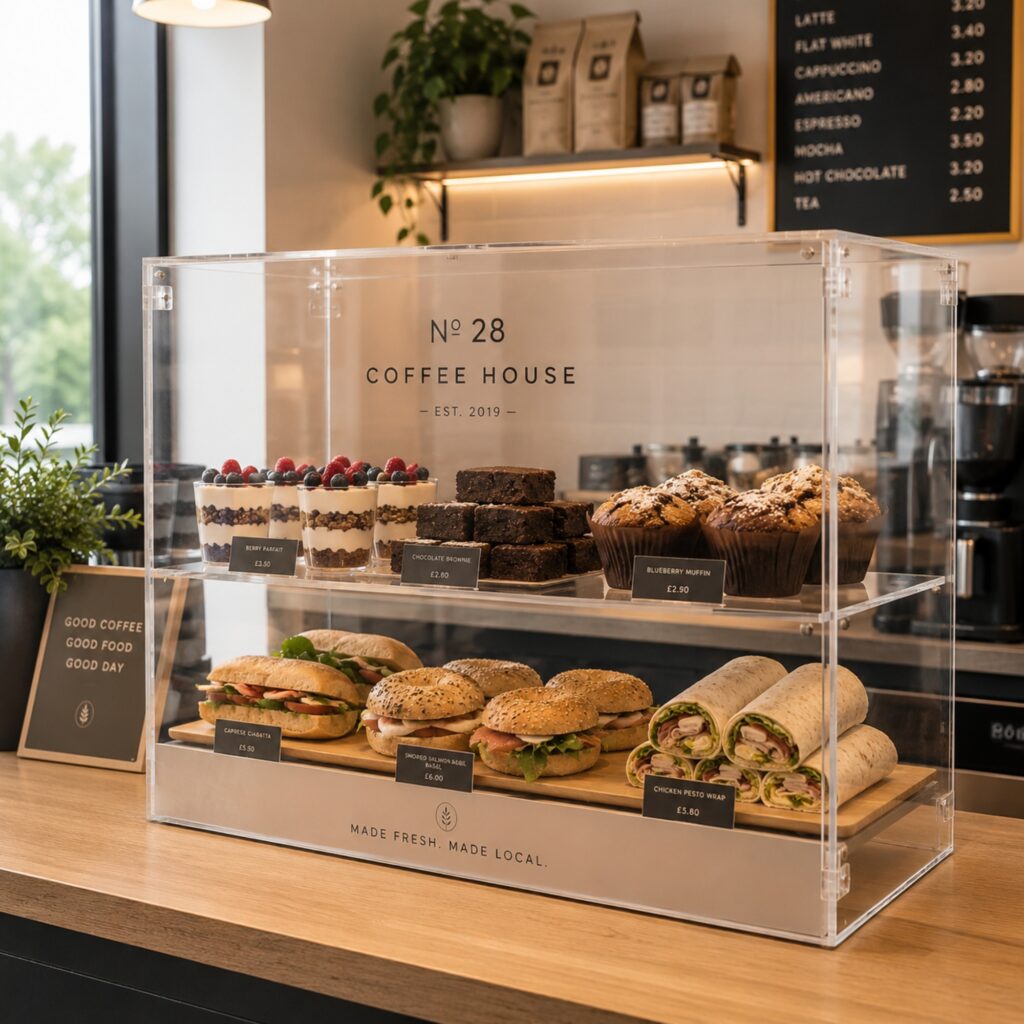
Common Uses of PETG
- Retail displays
- Protective covers
- Medical packaging
- Food displays
- Fabricated boxes
- Printed graphics
- Vacuum-formed components
Downsides of PETG
PETG can scratch more easily than acrylic and generally doesn’t offer the same long-term outdoor durability.
For exterior applications with heavy UV exposure, acrylic often performs better.
Common Uses of PETG
- Retail displays
- Protective covers
- Medical packaging
- Food displays
- Fabricated boxes
- Printed graphics
- Vacuum-formed components
Downsides of PETG
PETG can scratch more easily than acrylic and generally doesn’t offer the same long-term outdoor durability.
For exterior applications with heavy UV exposure, acrylic often performs better.
Common Mistakes People Make When Choosing Plastic Sheets
Choosing Based Only on Price
The cheapest sheet is not always the cheapest long term.
Using acrylic where impact resistance is needed often leads to cracks and replacements.
Assuming All Clear Plastics Are the Same
They may look similar initially, but their performance is completely different under stress, UV exposure, heat, and fabrication.
Ignoring Scratch Resistance
Polycarbonate is incredibly tough but scratches more easily than acrylic. For customer-facing displays, this matters.
Using PETG Outdoors for Long-Term Installations
PETG performs well indoors but may not deliver the same lifespan as acrylic outdoors.
Using the Wrong Cutting Method
Different plastics respond differently to:
- Laser cutting
- CNC machining
- Drilling
- Bending
- Gluing
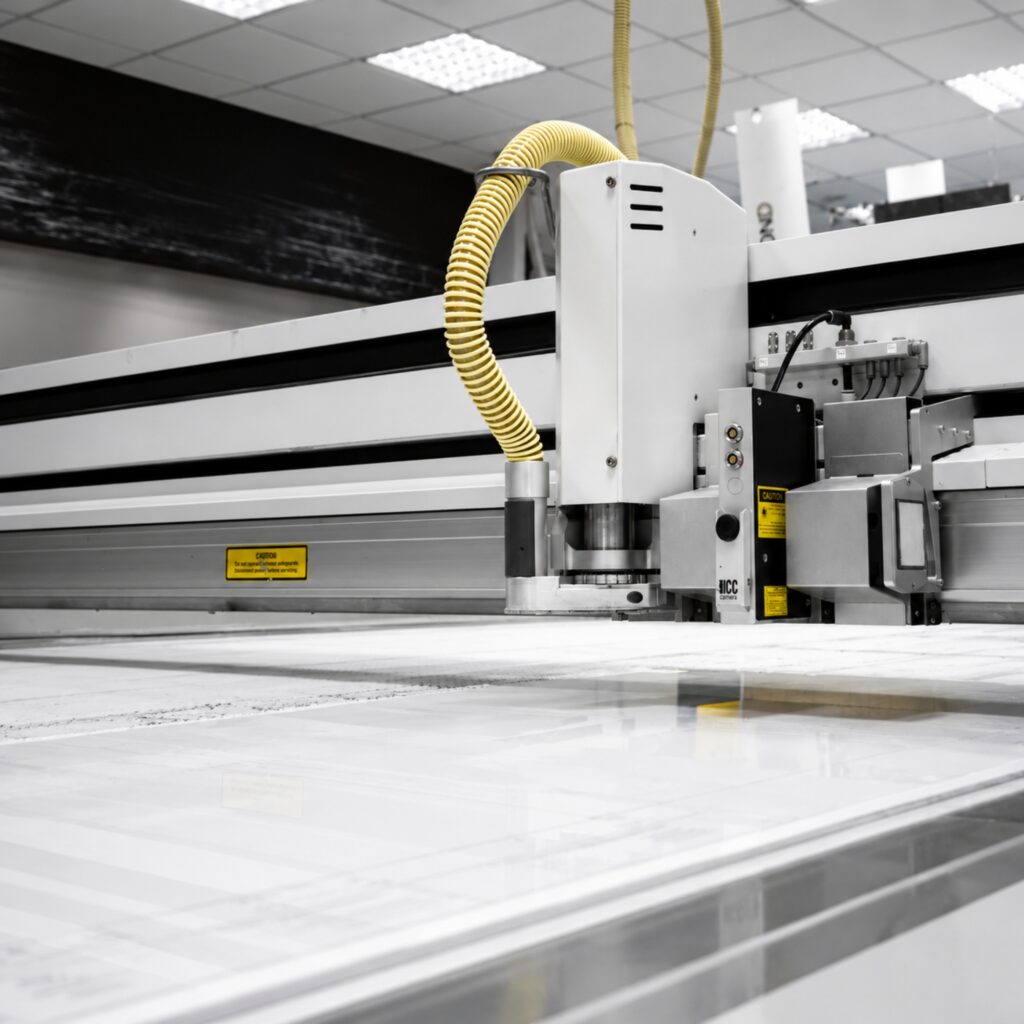
Incorrect fabrication methods can cause stress fractures and edge cracking.
Using PETG Outdoors for Long-Term Installations
PETG performs well indoors but may not deliver the same lifespan as acrylic outdoors.
Using the Wrong Cutting Method
Different plastics respond differently to:
- Laser cutting
- CNC machining
- Drilling
- Bending
- Gluing
Incorrect fabrication methods can cause stress fractures and edge cracking.
Quick Comparison: Acrylic vs Polycarbonate vs PETG
Clarity
Excellent
Very good
Very good
Strength
Moderate
Extremely high
High
Impact Resistance
Can crack
Nearly unbreakable
Good
Scratch Resistance
Excellent
Moderate
Moderate
UV Resistance
Excellent
Good with coating
Moderate
Ease of Fabrication
Excellent
Moderate
Excellent
Thermoforming
Good
Good
Excellent
Cost
Lower
Highest
Mid-range
Outdoor Use
Excellent
Excellent with UV protection
Limited long-term
Weight
Lightweight
Lightweight
Lightweight
Quick Comparison: Acrylic vs Polycarbonate vs PETG
Strength
Acrylic – Moderate
Polycarbonate – Extremely high
PETG – High
Impact Resistance
Acrylic – Can crack
Polycarbonate – Nearly unbreakable
PETG – Good
Scratch Resistance
Acrylic – Excellent
Polycarbonate – Moderate
PETG – Moderate
UV Resistance
Acrylic – Excellent
Polycarbonate – Good with coating
PETG – Moderate
Ease of Fabrication
Acrylic – Excellent
Polycarbonate – Moderate
PETG – Excellent
Thermoforming
Acrylic – Good
Polycarbonate – Good
PETG – Excellent
Cost
Acrylic – Lower
Polycarbonate – Highest
PETG – Mid-range
Outdoor Use
Acrylic – Excellent
Polycarbonate – Excellent with UV protection
PETG – Limited long-term
Weight
Acrylic – Lightweight
Polycarbonate – Lightweight
PETG – Lightweight
Best For
Acrylic – Signs, displays, glazing
Polycarbonate – Safety glazing, machine guards
PETG – Displays, fabrication, printing
Which Plastic Should You Choose?
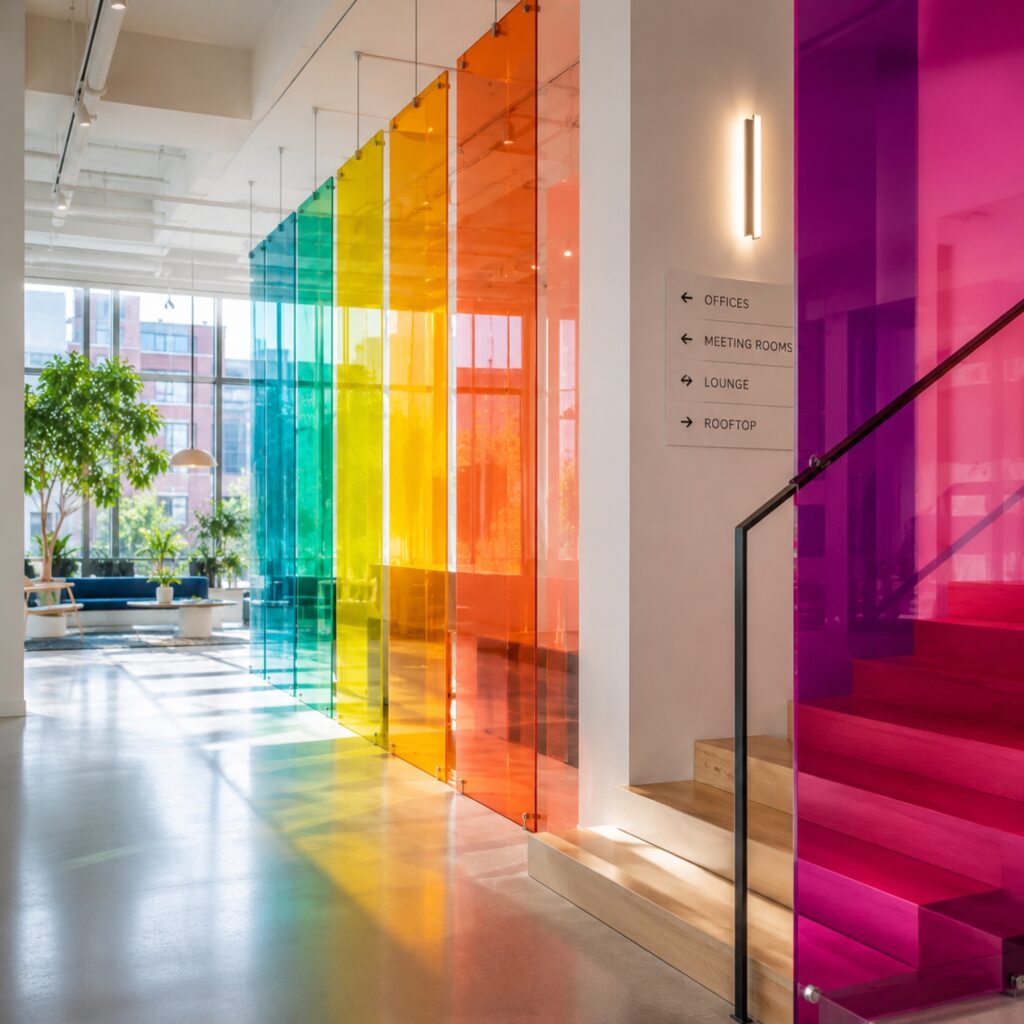
Choose Acrylic If You Need:
- A premium, glass-like appearance
- Strong visual clarity for displays or branding
- A lightweight alternative to glass
- A material suited to indoor or protected outdoor use
Choose Polycarbonate If You Need:
- Maximum impact resistance and safety performance
- A material that can withstand heavy use or potential impact
- Extra durability for industrial or high-traffic environments
- A strong alternative to glass where strength matters most

Choose Acrylic If You Need:
A premium, glass-like appearance
Strong visual clarity for displays or branding
A lightweight alternative to glass
A material suited to indoor or protected outdoor use
Choose Polycarbonate If You Need:
Maximum impact resistance and safety performance
A material that can withstand heavy use or potential impact
Extra durability for industrial or high-traffic environments
A strong alternative to glass where strength matters most
Which Plastic is Best?
There’s no single “best” plastic sheet — only the best material for your specific application.
Here’s the simplest way to think about it:
- Acrylic = best appearance and weather resistance
- Polycarbonate = best toughness and safety
- PETG = best fabrication flexibility
If your priority is aesthetics, choose acrylic ✔️
If safety and impact resistance matter most, choose polycarbonate ✔️
If you need easy forming and fabrication, PETG is often the smartest option ✔️
The right material can improve durability, reduce maintenance, simplify manufacturing, and ultimately save money over the life of your project.
Ready to Choose the Right Plastic Sheet for Your Project?
Choosing the right plastic sheet can make a huge difference to the durability, appearance, and performance of your project. Whether you need crystal-clear acrylic for signage, impact-resistant polycarbonate for protection, or versatile PETG for fabrication, selecting the right material from the start helps avoid costly mistakes later on.
At Cut Plastic Sheeting, all of our plastic sheets can be supplied cut to size, making installation and fabrication quicker and easier. If you’re unsure which material is best suited to your application, our team is always happy to help you compare options and find the right solution for your project.
Explore our full range of cut-to-size plastic sheets and order with confidence today!

Ready to Choose the Right Plastic Sheet for Your Project?
Choosing the right plastic sheet can make a huge difference to the durability, appearance, and performance of your project. Whether you need crystal-clear acrylic for signage, impact-resistant polycarbonate for protection, or versatile PETG for fabrication, selecting the right material from the start helps avoid costly mistakes later on.
At Cut Plastic Sheeting, all of our plastic sheets can be supplied cut to size, making installation and fabrication quicker and easier.
If you’re unsure which material is best suited to your application, our team is always happy to help you compare options and find the right solution for your project.
Explore our full range of cut-to-size plastic sheets and order with confidence today!
Frequently Asked Questions (FAQ)
Q: What is the difference between acrylic, polycarbonate, and PETG?
A: Acrylic, polycarbonate, and PETG are all clear plastic materials commonly used as alternatives to glass, but each has different strengths. Acrylic offers the best optical clarity and weather resistance, polycarbonate is the strongest and most impact resistant, and PETG is known for easy fabrication and thermoforming.
Q: Which is stronger: acrylic or polycarbonate?
A: Polycarbonate is significantly stronger and more impact resistant than acrylic. While acrylic is durable and stronger than glass, it can crack under heavy impact. Polycarbonate is often described as virtually unbreakable, making it ideal for safety glazing, machine guards, and protective screens.
Q: Is PETG stronger than acrylic?
A: PETG is generally more impact resistant than acrylic and less likely to crack during fabrication. However, acrylic offers better scratch resistance, optical clarity, and long-term outdoor performance.
Q: Which plastic sheet is best for outdoor use?
A: Acrylic is usually the best choice for outdoor applications because it has excellent UV and weather resistance. Polycarbonate can also perform well outdoors when UV-protected grades are used. PETG is better suited to indoor or shorter-term outdoor applications.
Q: What is acrylic used for?
A: Acrylic is commonly used for signage, display cases, secondary glazing, protective screens, retail displays, and decorative panels. It is popular because of its glass-like clarity, lightweight properties, and excellent finish.
Q: What is polycarbonate used for?
A: Polycarbonate is widely used for machine guards, safety glazing, roofing panels, protective barriers, greenhouse panels, and industrial applications where high impact resistance is required.
Q: What is PETG used for?
A: PETG is commonly used for retail displays, fabricated covers, packaging, printed graphics, food displays, and thermoformed components because it is easy to shape, machine, and fabricate.
Q: Which plastic sheet is easiest to cut and fabricate?
A: PETG is often considered the easiest material to fabricate because it bends, forms, and machines easily. Acrylic is also popular for laser cutting and polished edges, while polycarbonate can be more difficult to machine cleanly.
Q: Which plastic sheet is best for signage?
A: Acrylic is usually the preferred choice for signage because it offers excellent clarity, a premium finish, UV resistance, and smooth polished edges.
Q: Does polycarbonate scratch easily?
A: Yes, polycarbonate can scratch more easily than some other clear plastics. While it is extremely strong and impact resistant, its surface is softer than materials like acrylic, so it can show marks or scratches over time, especially in high-contact or abrasive environments.
Q: Is acrylic better than glass?
A: Acrylic is lighter and more impact resistant than glass, making it a popular alternative in many applications. It also offers excellent clarity and weather resistance while being easier to fabricate.
Q: Can acrylic crack when drilled or cut?
A: Yes, acrylic can crack if incorrect tools or fabrication methods are used. Proper drilling speeds, cutting techniques, and handling are important to avoid stress fractures and edge cracking.
Q: Is PETG suitable for outdoor use?
A: PETG can be used outdoors for some applications, but it generally does not offer the same long-term UV resistance and durability as acrylic.
Q: Which clear plastic sheet is best for impact resistance?
A: Polycarbonate is the best clear plastic sheet for impact resistance. It is commonly used in safety and industrial environments because it can withstand heavy impacts without shattering.
Q: What is the best alternative to glass?
A: Acrylic, polycarbonate, and PETG are all popular alternatives to glass depending on the application. Acrylic is best for clarity and appearance, polycarbonate for strength and safety, and PETG for fabrication and forming.
Q: Can acrylic, polycarbonate, and PETG be supplied cut to size?
A: Yes, all three materials are widely available cut to size, allowing for easier installation, reduced waste, and faster project completion.